
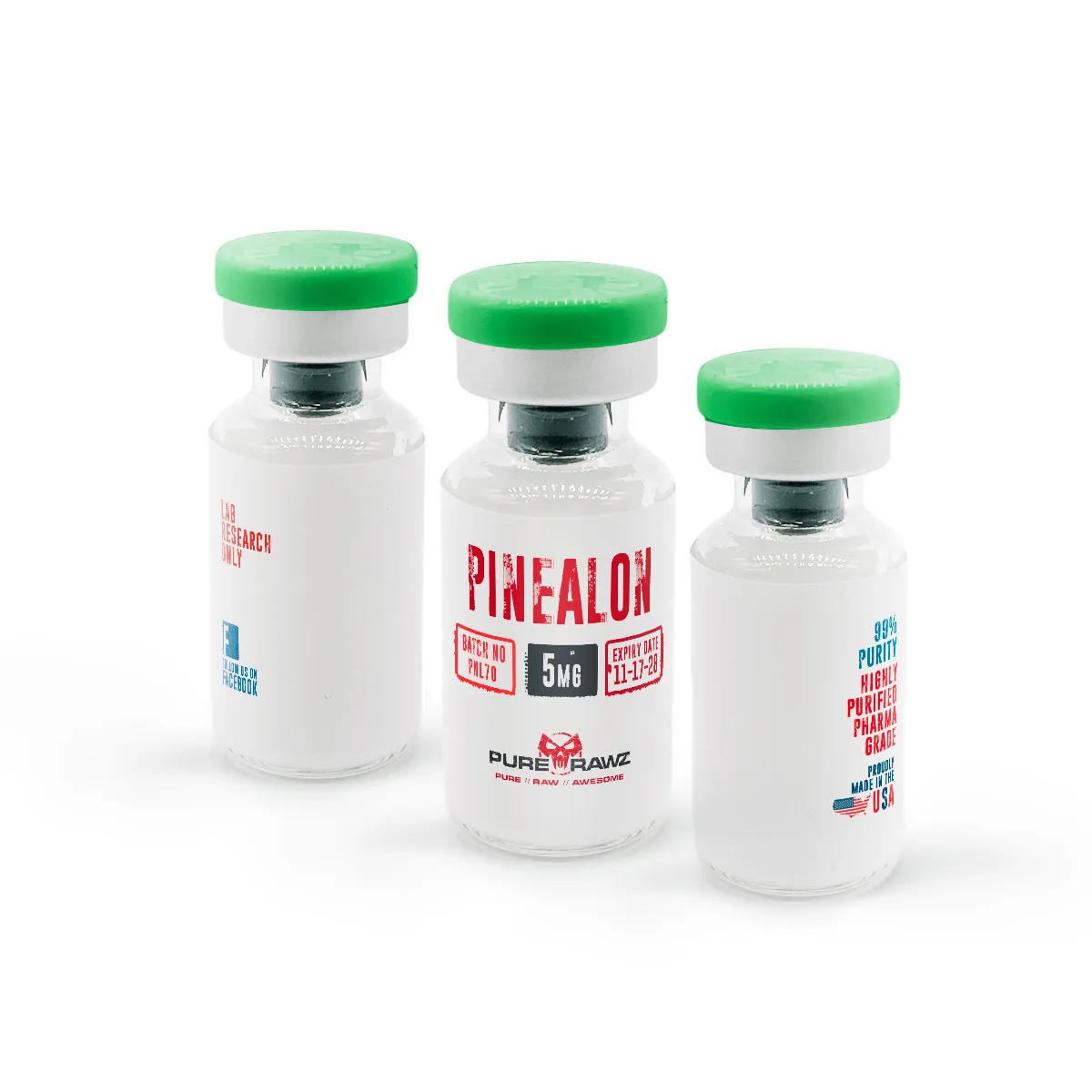
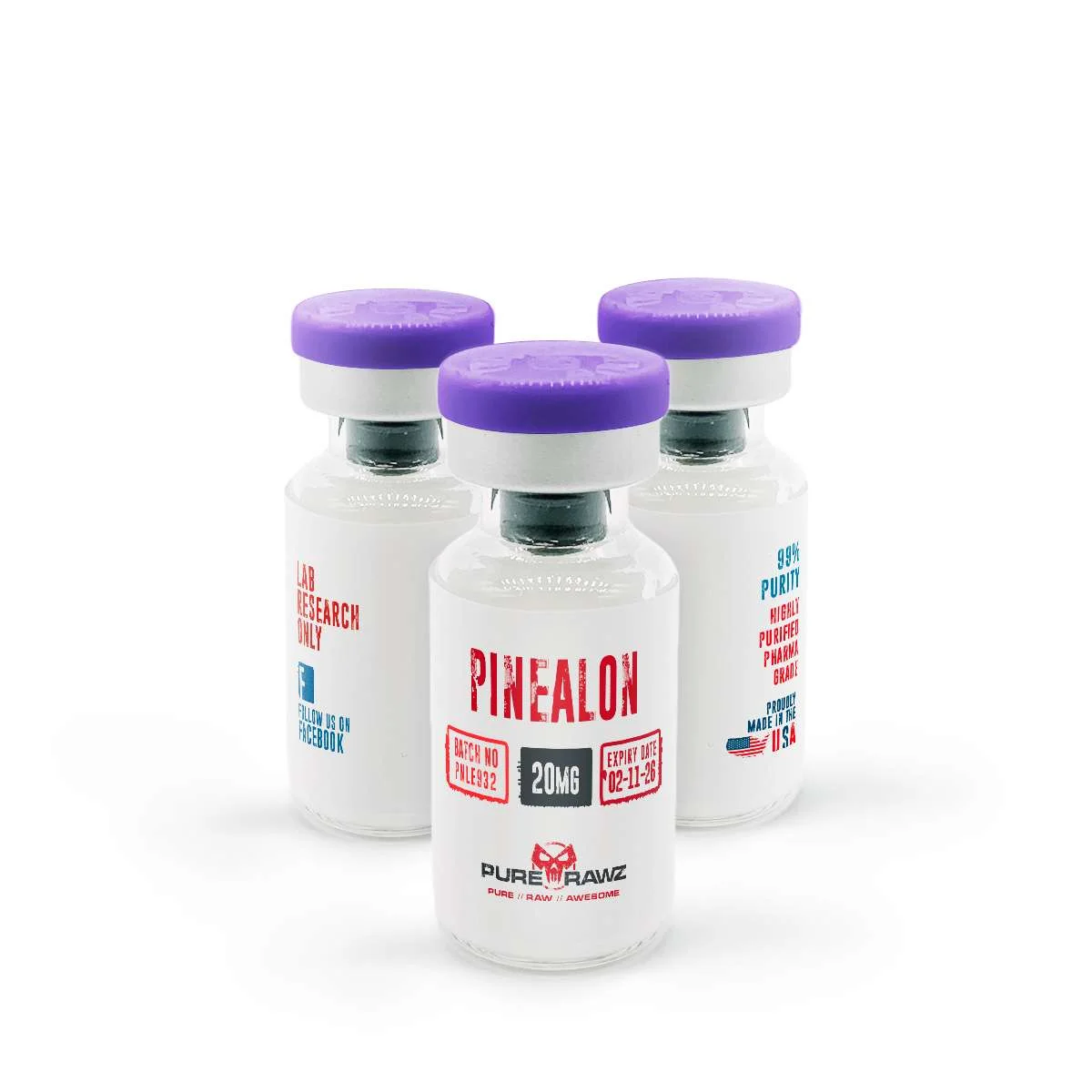
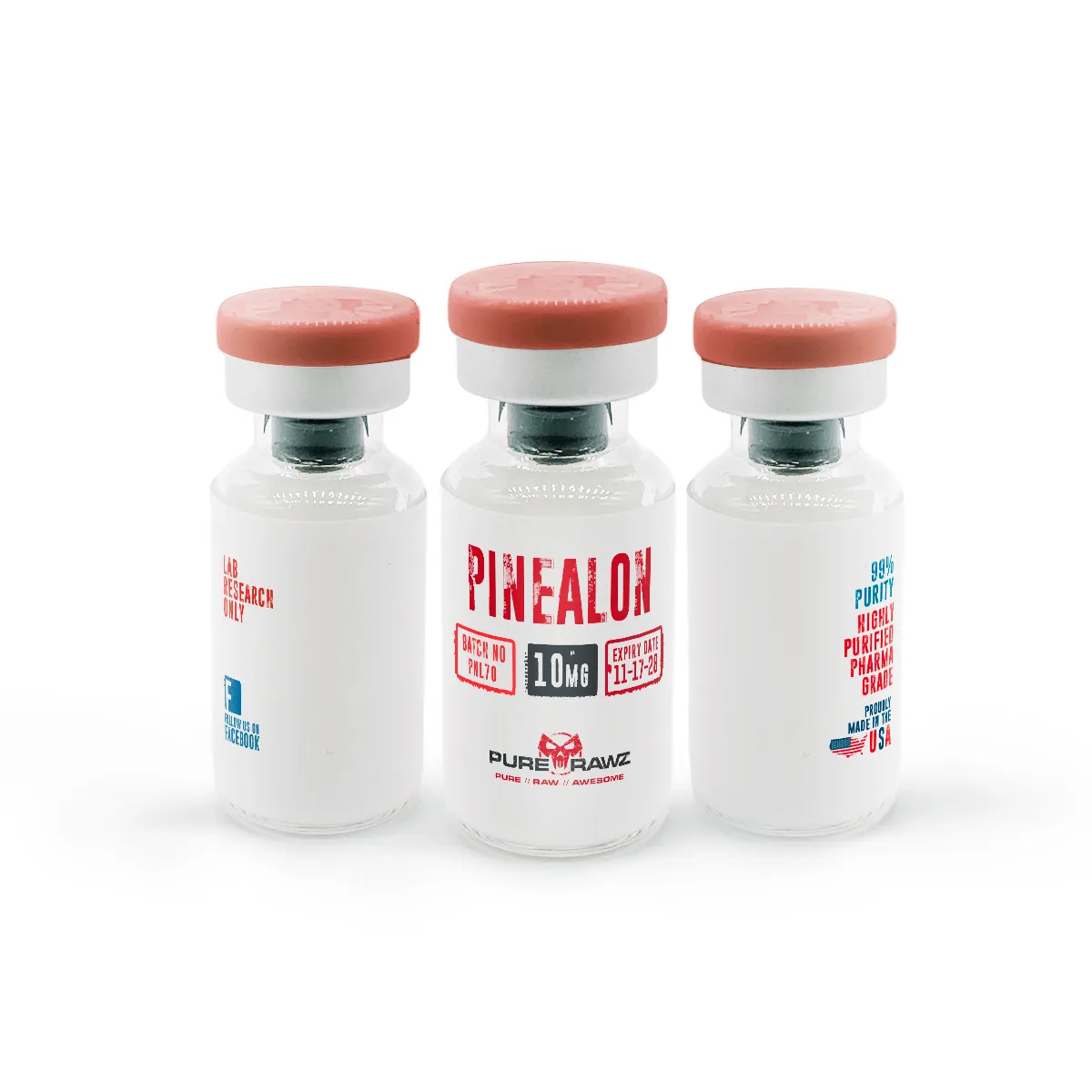
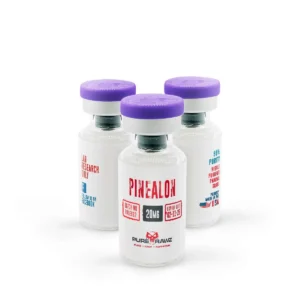
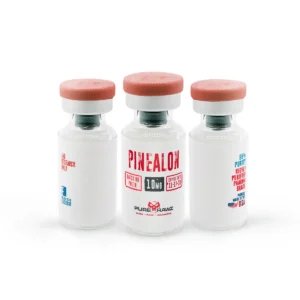
Pinealon

$65.00
Note: We recommend using sterile Bacteriostatic Water for reconstitution.
- 1st and 3rd Party Verified for 99% Purity
- Free Shipping on Orders Over $100+
Overview of Pinealon
Pinealon is a synthetic tripeptide composed of L-glutamic acid, L-aspartic acid, and L-arginine (Glu-Asp-Arg; EDR). It has been investigated in experimental research for cellular regulation and gene-expression studies.
The peptide belongs to a group of short regulatory peptides originally studied in preclinical laboratory settings for their potential interactions with cellular signaling pathways.
Mechanism of Action of Pinealon
Pinealon has been investigated in preclinical studies for its potential to modulate intracellular signaling and gene regulatory processes.
Experimental studies suggest that short regulatory peptides may interact with DNA-binding proteins and influence chromatin accessibility.
Studies have also indicated that the short peptides may contribute to the regulation of RNA transcription and downstream protein expression in cultured cells. These proposed mechanisms remain under active investigation and have largely been characterized using laboratory models rather than human clinical research.
Current evidence should be interpreted as mechanistic and preclinical rather than therapeutic, as additional research is required to establish biological relevance in humans.
Chemical and Molecular Properties
| Property | Specification / Value |
| Chemical Name | L-Glutamyl-L-aspartyl-L-arginine |
| Common Abbreviations | EDR, Glu-Asp-Arg |
| CAS Registry Number | 175175-23-2 |
| Peptide Sequence | H-Glu-Asp-Arg-OH |
| Molecular Weight (Free Base) | 418.41 g/mol |
| Molecular Weight (Acetate Salt) | 478.45 g/mol |
Possible Research Applications of Pinealon
Further studies are needed to characterize Pinealon across experimental systems. So far, researchers have studied the following applications
- Investigation of gene expression and transcriptional regulation in experimental models
- Studies of short regulatory peptides and their interactions with DNA, chromatin-associated components, and other molecular targets in laboratory systems
- Evaluation of cellular signaling and peptide-mediated molecular interactions using in vitro experimental models
- Structure–activity relationship (SAR) studies comparing Pinealon with related short peptide analogs to characterize sequence-dependent biological activity
- Reference compound for analytical method development, including HPLC purity assessment, LC-MS identity verification, peptide stability evaluation, and quality control procedures
- Experimental studies of peptide physicochemical properties, stability, and handling under standardized laboratory conditions
Frequently Asked Questions
What type of peptide is Pinealon?
Pinealon is classified as a synthetic regulatory tripeptide composed of the amino acids glutamic acid, aspartic acid, and arginine. It belongs to a broader class of short bioregulatory peptides investigated in laboratory research involving gene regulation, chromatin biology, cellular signaling, and molecular aging.
How is Pinealon analyzed for research quality?
Research-grade Pinealon is commonly characterized using analytical techniques including high-performance liquid chromatography (HPLC) for purity assessment and liquid chromatography-mass spectrometry (LC-MS) for molecular identity verification. Additional analytical documentation may include peptide sequence confirmation, stability testing, and Certificates of Analysis (COAs).
Is Pinealon related to other regulatory peptides?
Pinealon belongs to a family of short regulatory peptides investigated in experimental biology. Related research has explored peptides such as Epitalon, Vesugen, Vilon, and Thymogen, each of which possesses a distinct amino acid sequence and has been investigated in different laboratory contexts. These peptides are not interchangeable and continue to be evaluated independently in preclinical research.
Is Pinealon FDA-approved for human use?
No. Pinealon is not approved by the U.S. Food and Drug Administration (FDA) for human or veterinary use. It has not been established as safe or effective for the diagnosis, treatment, cure, or prevention of any disease.
What is the amino acid sequence of Pinealon?
Pinealon consists of the three amino acids:
Glu-Asp-Arg (EDR)
This short peptide has been investigated as part of broader research into regulatory peptide biology.
How should Pinealon be stored?
Based on standard peptide handling practices, lyophilized Pinealon should be stored at −20°C in a dry, desiccated environment protected from moisture and light. Researchers should minimize repeated freeze-thaw cycles after reconstitution.
Why Buy Pinealon from Purerawz?
Research-quality peptides require consistent analytical characterization and standardized handling to support reproducibility across laboratory studies. Product documentation, including purity testing and identity verification where applicable, helps researchers evaluate material specifications before use.
Pinealon is supplied as a Research Use Only (RUO) product and is intended exclusively for legitimate laboratory and scientific investigations. Product information is presented using available analytical data, standardized storage recommendations, and technical specifications to support responsible handling in research environments.
This content is designed to provide researchers with clear product information while maintaining scientific accuracy and transparency regarding the intended research use of the peptide.
Disclaimer
This information is for educational purposes only and not medical advice. Products are for research use only. Research must follow IRB or IACUC guidelines. Verify information independently before purchasing. By ordering, you agree to our Terms and Conditions. If you are not 100% satisfied with the product you received, please contact us at sales@purerawzlab.com
ATTENTION: All our products are for LABORATORY AND RESEARCH PURPOSES ONLY, not for veterinary or human use.
Reference Links
Khavinson, V., Ribakova, Y., Kulebiakin, K., Vladychenskaya, E., Kozina, L., Arutjunyan, A., & Boldyrev, A. (2011). Pinealon increases cell viability by suppression of free radical levels and activating proliferative processes. Rejuvenation Research, 14(5), 535–541. https://purerawlab.com style=”font-weight: 400″>
Khavinson, V. K., Linkova, N. S., Trofimov, A. V., et al. (2020). EDR peptide: Possible mechanism of gene expression and protein synthesis regulation involved in the pathogenesis of Alzheimer’s disease. International Journal of Molecular Sciences, 22(1), 119. https://purerawlab.com
| Strength | 20mg, 10mg, 5mg |
|---|
Related products
Peptides
Peptide Unconstituted
Peptides
Peptides
Peptides
Peptides
Peptides