
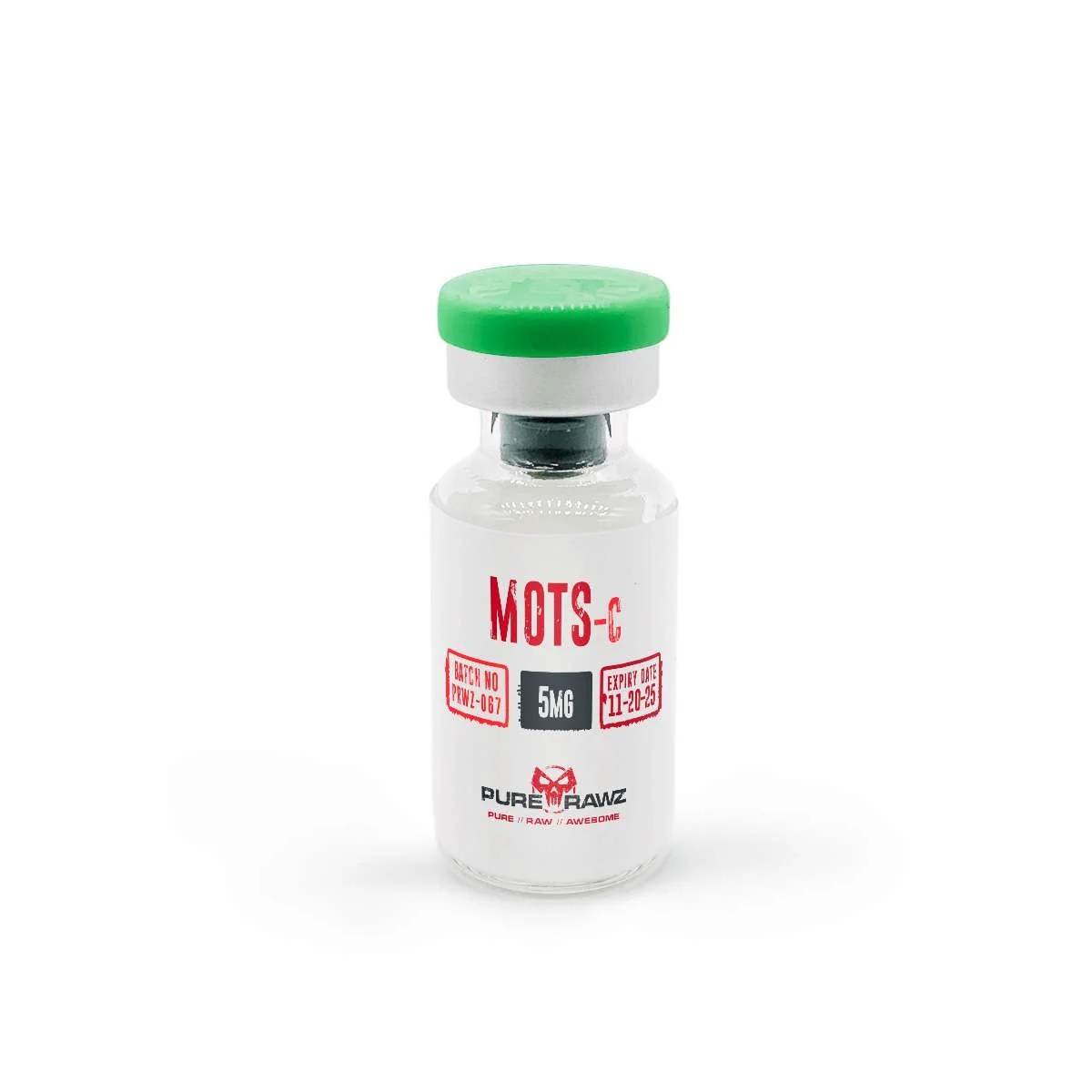
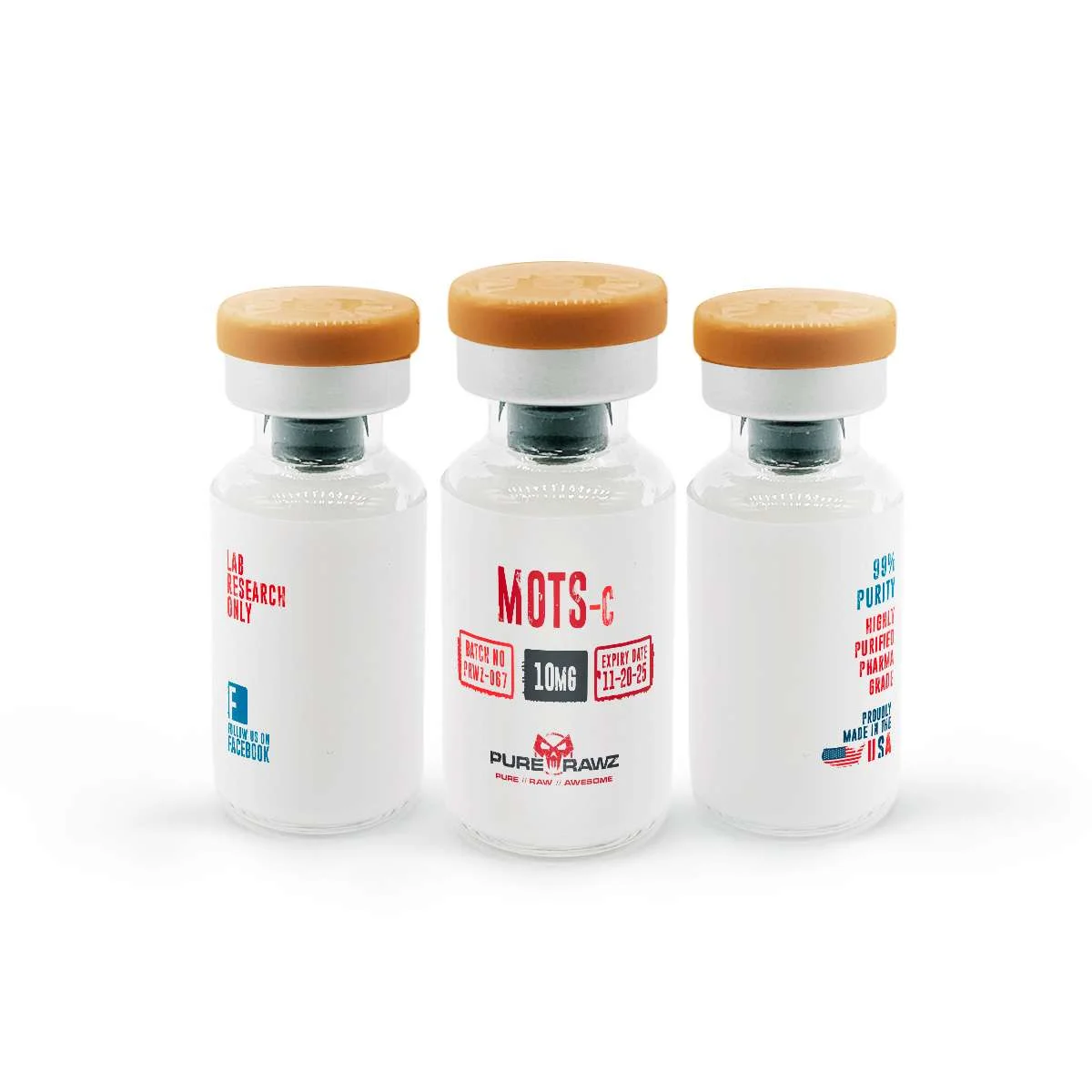




MOTS-c


$50.59
Note: We recommend using sterile Bacteriostatic Water for reconstitution.
- 1st and 3rd Party Verified for 99% Purity
- Free Shipping on Orders Over $100+
Overview of MOTS-c
MOTS-c (Mitochondrial Open Reading Frame of the 12S rRNA-c) is a synthetic peptide corresponding to a mitochondrial-derived peptide encoded within the mitochondrial 12S ribosomal RNA region.
It is investigated in laboratory research for mitochondrial signaling, cellular metabolism, peptide-mediated molecular communication, and mitochondrial-to-nuclear signaling..
Researchers also investigate its physicochemical properties, peptide stability, molecular structure, and analytical characteristics to support studies in peptide chemistry, molecular biology, mitochondrial research, and preclinical experimental models.
Chemical and Molecular Properties
| Property | Information |
| PubChem CID | 146675088 |
| Full Name | Mitochondrial Open Reading Frame of the 12S rRNA-c |
| Amino Acid Length | 16 amino acids |
| Peptide Sequence | MRWQEMGYIFYPRKLR |
| Molecular Formula | C101H152N28O22S2
OR (batch-dependent) |
| Molecular Weight | 2174.6 g/mol |
| Synonyms | Mots-c
1627580-64-6 UNII-A5CV6JFB78 MOTS-c (human) (trifluoroacetate salt) A5CV6JFB78 |
| CAS | 1627580-64-6 |
| 2D Structure | |
| Analytical Verification | HPLC, LC-MS |
| Classification | Research Use Only (RUO) |
| Storage | Typically −20°C or −80°C for long-term laboratory storage |
Proposed Working Mechanism of MOTS-c
MOTS-c is investigated in laboratory research for its involvement in mitochondrial-to-nuclear communication, cellular metabolic regulation, and peptide-mediated molecular signaling.
Published preclinical studies have examined its interaction with molecular pathways associated with AMP-activated protein kinase (AMPK) signaling, cellular energy sensing, metabolic homeostasis, and nuclear gene expression.
Experimental investigations also explore the relationship between MOTS-c and mitochondrial stress response pathways, adaptive cellular signaling, redox-associated molecular processes, and metabolic pathway regulation.
Potential Research Applications of MOTS-c
Further studies are needed to fully characterize MOTS-c across experimental systems. So far, researchers have focused on the following research areas.
-
Mitochondrial Biology Research
MOTS-c is investigated in preclinical studies examining mitochondrial-derived peptides and their role in mitochondrial signaling, cellular bioenergetics, and mitochondrial-to-nuclear communication.
-
Cellular Metabolism Research
Published research has explored MOTS-c in experimental models investigating cellular metabolism, metabolic signaling pathways, nutrient sensing, and energy homeostasis under controlled laboratory conditions.
-
Gene Expression Research
Experimental investigations examine the influence of MOTS-c on transcriptional regulation and nuclear gene expression associated with cellular metabolic adaptation and mitochondrial signaling.
-
Cellular Stress Response Research
Preclinical studies investigate the relationship between MOTS-c and molecular pathways associated with oxidative stress responses, adaptive cellular signaling, and mitochondrial stress signaling to better characterize peptide-mediated regulatory mechanisms.
Why Researchers Source MOTS-c from Purerawz?
Purerawz supplies Research Use Only (RUO) MOTS-c intended for laboratory, analytical, and preclinical research applications. Each batch is accompanied by a Certificate of Analysis (COA) that documents analytical information such as peptide identity, purity, and batch-specific testing to support laboratory recordkeeping and material traceability.
FAQs
Why is MOTS-c investigated in mitochondrial research?
Researchers investigate MOTS-c to learn mitochondrial biology and the molecular mechanisms involved in cellular bioenergetics, metabolic regulation, mitochondrial signaling, and adaptive cellular responses. Published preclinical studies have also explored its relationship with mitochondrial-to-nuclear communication, gene expression, and cellular stress-response pathways, contributing to broader investigations of mitochondrial-derived peptides and cellular homeostasis.
What Is a Mitochondrial-Derived Peptide (MDP)?
A mitochondrial-derived peptide (MDP) is a small bioactive peptide encoded by short open reading frames (sORFs) within mitochondrial DNA (mtDNA). Unlike most proteins encoded by the nuclear genome, MDPs originate from the mitochondrial genome and are investigated for their roles in mitochondrial-to-nuclear signaling, cellular metabolism, stress-response pathways, and mitochondrial homeostasis. MOTS-c is one of the best-characterized mitochondrial-derived peptides studied in laboratory and preclinical research.
Where Is MOTS-c Encoded?
MOTS-c is encoded by a short open reading frame (sORF) located within the mitochondrial 12S ribosomal RNA (12S rRNA) gene of human mitochondrial DNA (mtDNA). This unique mitochondrial origin distinguishes MOTS-c from most peptides, which are encoded by nuclear DNA, making it an important model for studying mitochondrial genetics and mitochondrial-derived peptide biology.
What Is Mitochondrial-to-Nuclear Signaling?
Mitochondrial-to-nuclear signaling, also known as mitochondrial retrograde signaling, is a cellular communication process in which mitochondria transmit molecular signals to the nucleus in response to changes in cellular metabolism or mitochondrial function. Laboratory studies investigate MOTS-c as a mitochondrial-derived peptide involved in this signaling network to better understand cellular adaptation, metabolic regulation, and nuclear gene expression
How Is MOTS-c Synthesized?
Research-grade MOTS-c is typically synthesized using solid-phase peptide synthesis (SPPS). Following synthesis, the peptide is purified by reverse-phase high-performance liquid chromatography (RP-HPLC) and characterized using liquid chromatography-mass spectrometry (LC-MS) or mass spectrometry (MS) to verify molecular identity, chromatographic purity, and batch consistency. The purified peptide is commonly supplied as a lyophilized powder for laboratory research.
What Analytical Methods Verify MOTS-c?
Research-grade MOTS-c is commonly characterized using reverse-phase high-performance liquid chromatography (RP-HPLC) to assess chromatographic purity and liquid chromatography-mass spectrometry (LC-MS) or mass spectrometry (MS) to confirm molecular identity and molecular weight. Additional analytical evaluations may include impurity profiling, peptide sequence verification, and batch-specific Certificate of Analysis (COA) documentation to support laboratory quality control and reproducible research.
How Stable Is MOTS-c?
Under recommended laboratory storage conditions, MOTS-c is generally supplied as a lyophilized peptide and stored at −20°C or −80°C to help maintain peptide integrity. Laboratory investigations may evaluate stability under repeated freeze-thaw cycles, hydrolysis, oxidation, moisture exposure, light exposure, and different buffer conditions to support experimental reproducibility and analytical consistency.
What Is the Amino Acid Sequence of MOTS-c?
MOTS-c is a synthetic 16-amino-acid peptide with the sequence MRWQEMGYIFYPRKLR. It corresponds to a mitochondrial-derived peptide encoded within the mitochondrial 12S ribosomal RNA (12S rRNA) region and is commonly investigated in peptide chemistry, mitochondrial biology, and molecular signaling research.
Disclaimer
This information is for educational purposes only and not medical advice. Products are for research use only. Research must follow IRB or IACUC guidelines. Verify information independently before purchasing. By placing an order, you agree to our Terms and Conditions. If you are not 100% satisfied with the product you received, please contact us at support@purerawz.co
ATTENTION: All our products are for LABORATORY AND RESEARCH PURPOSES ONLY, not for veterinary or human use
Reference Links
Lee, C., Zeng, J., Drew, B. G., Sallam, T., Martin-Montalvo, A., Wan, J., Kim, S.-J., Mehta, H. H., Hevener, A. L., de Cabo, R., & Cohen, P. (2015). The mitochondrial-derived peptide MOTS-c promotes metabolic homeostasis and reduces obesity and insulin resistance. Cell Metabolism, 21(3), 443–454. https://doi.org/10.1016/j.cmet.2015.02.009
Reynolds, J. C., Lai, R. W., Woodhead, J. S. T., Joly, J. H., Mitchell, C. J., Cameron-Smith, D., Lu, R., Cohen, P., Graham, N. A., Benayoun, B. A., Merry, T. L., & Lee, C. (2021). MOTS-c is an exercise-induced mitochondrial-encoded regulator of age-dependent physical decline and muscle homeostasis. Nature Communications, 12(1), 470. https://doi.org/10.1038/s41467-020-20790-0
Zheng, Y., Wei, Z., & Wang, T. (2023). MOTS-c: A promising mitochondrial-derived peptide for therapeutic exploitation. Frontiers in Endocrinology, 14, 1120533. https://doi.org/10.3389/fendo.2023.1120533
National Library of Medicine. (n.d.). PubMed. U.S. National Library of Medicine. https://pubmed.ncbi.nlm.nih.gov/
MedChemExpress. (n.d.). MOTS-c. https://www.medchemexpress.com/mots-c.html
| Form | Peptide, Nasal Spray |
|---|---|
| Strength | 5mg, 10mg, 40mg, 200mcg per spray/20mg, 20mg |
Related products

Peptides


Peptide Unconstituted

Peptides


Peptide Unconstituted

Peptides


Peptide Unconstituted

Peptides