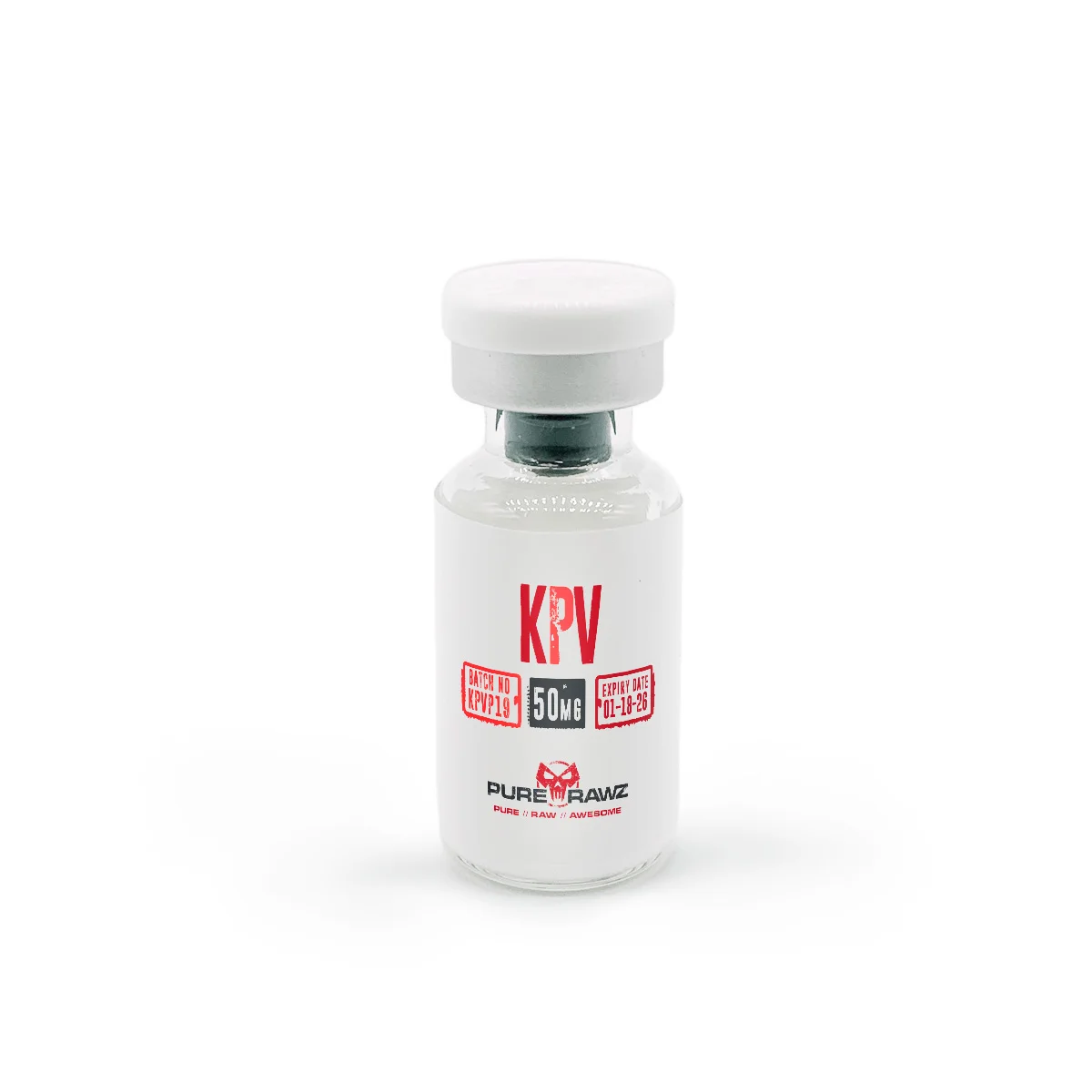
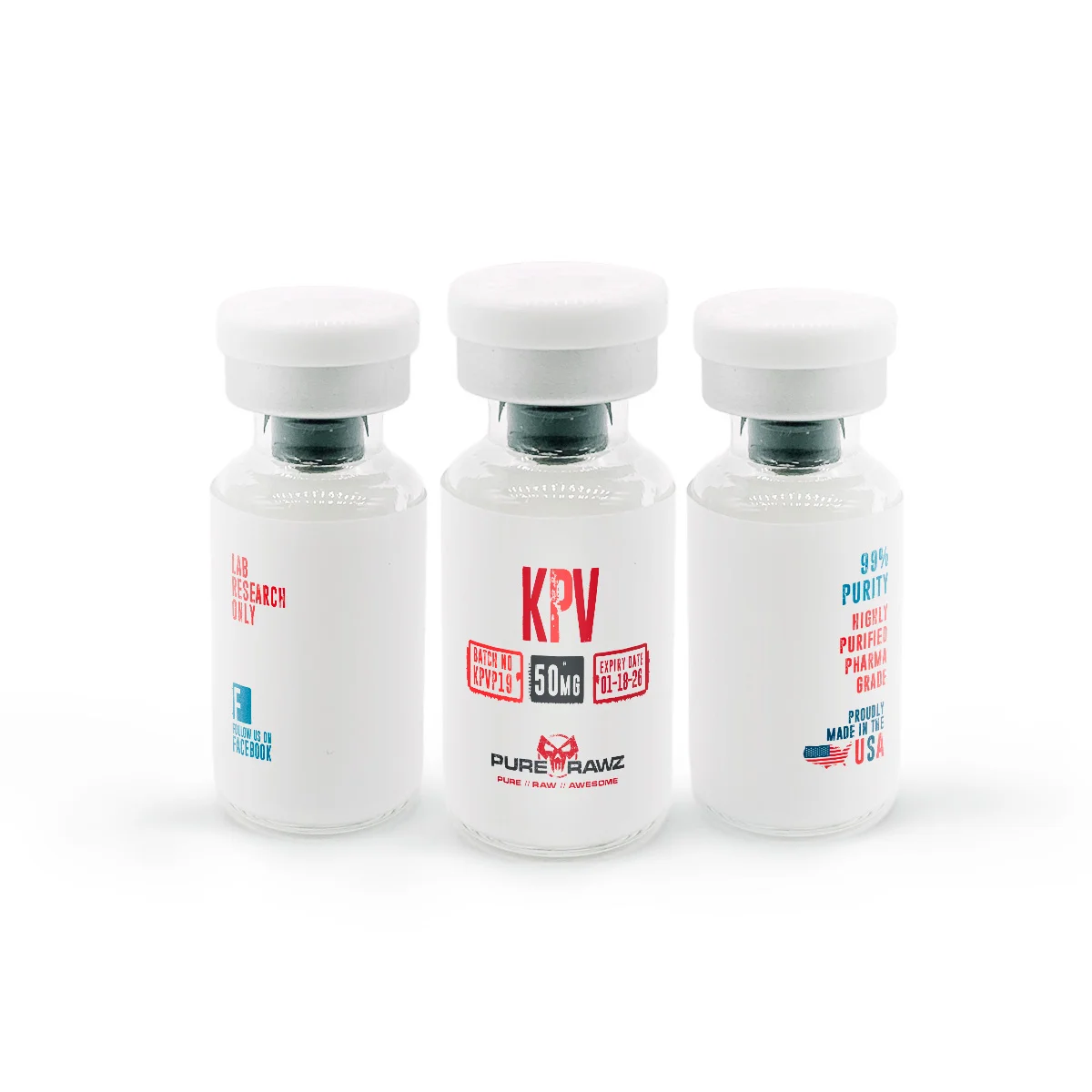
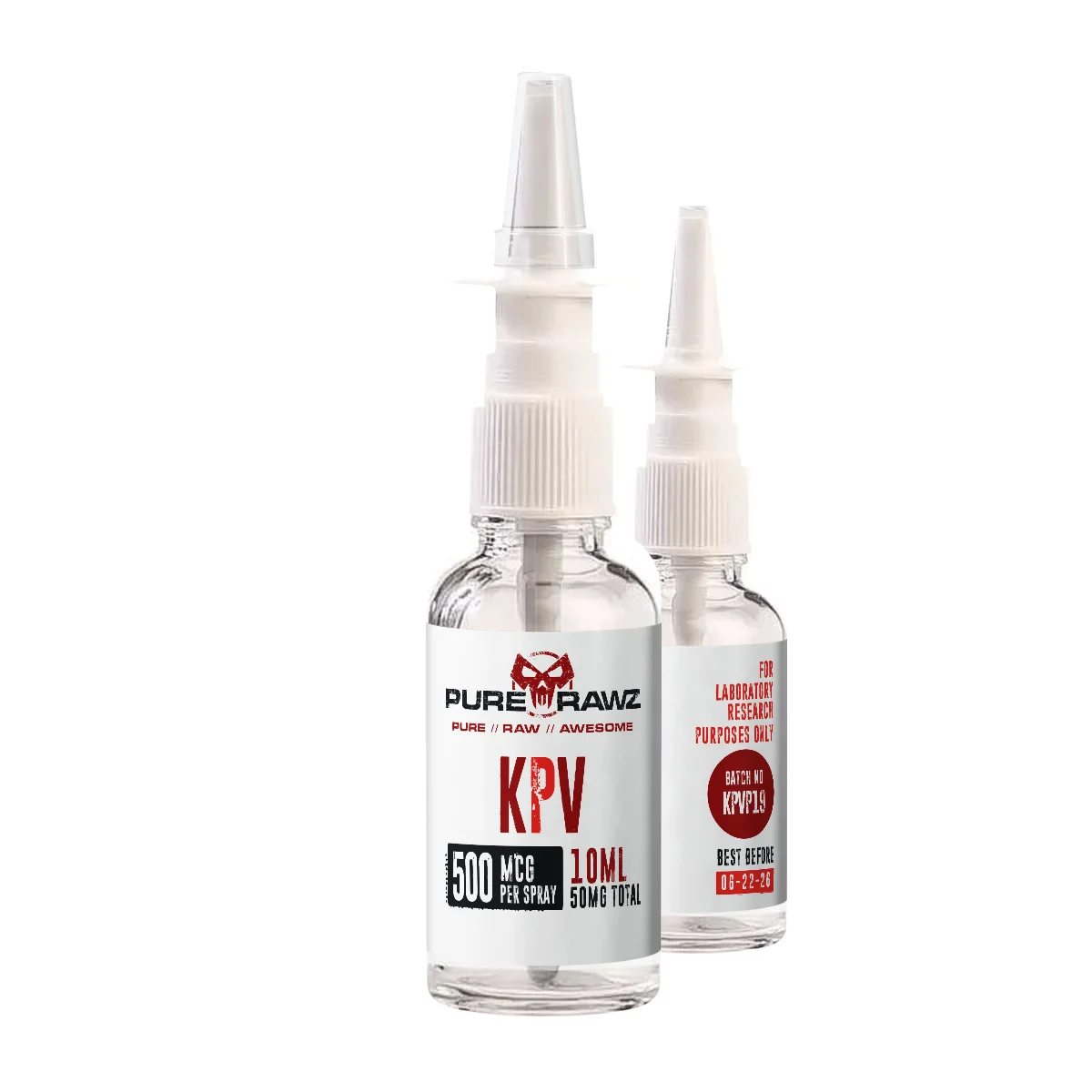
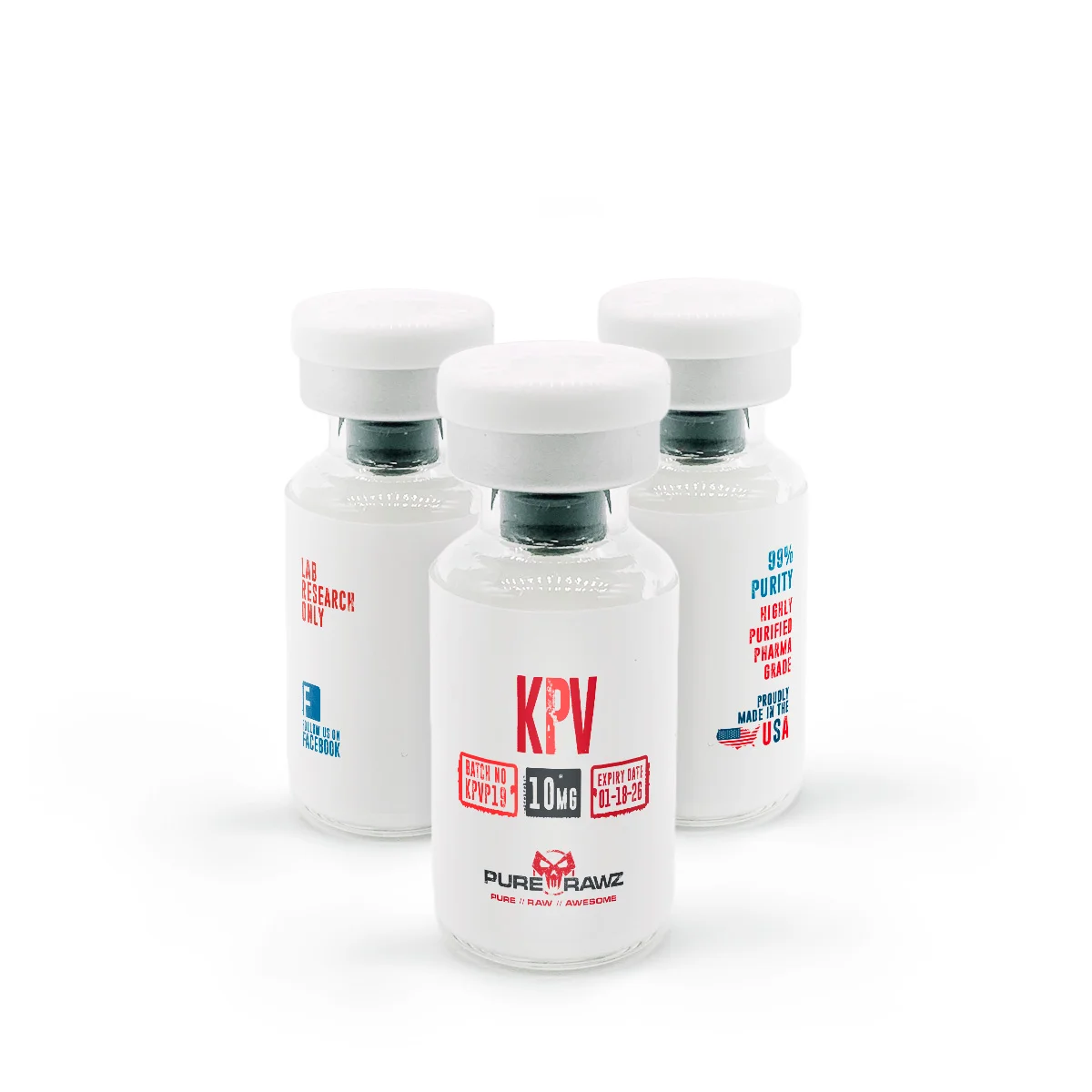
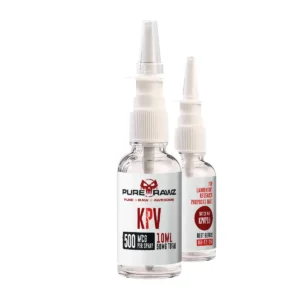
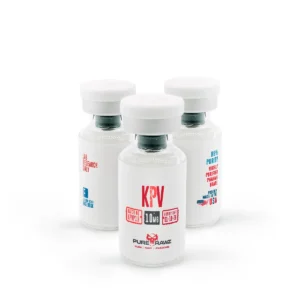
KPV (Lysine-Proline-Valine)
$36.80
Note: We recommend using sterile Bacteriostatic Water for reconstitution.
- 1st and 3rd Party Verified for 99% Purity
- Free Shipping on Orders Over $100+
Overview of KPV (L-Lysyl-L-Prolyl-L-Valine) Peptide
KPV (L-Lysyl-L-Prolyl-L-Valine) is a synthetic tripeptide corresponding to the C-terminal amino acid sequence (α-MSH 11–13) of the endogenous peptide α-melanocyte-stimulating hormone (α-MSH), which is derived from the precursor protein proopiomelanocortin (POMC). Due to its well-defined structure and relationship to α-MSH, KPV is widely investigated in laboratory research as a model peptide for studying peptide chemistry, molecular signaling, and structure-function relationships.
Experimental research has examined KPV in biochemical, cellular, and preclinical models to investigate peptide-mediated molecular interactions and intracellular signaling pathways, including NF-κB, MAPK, and AP-1 signaling networks. Researchers also utilize KPV to evaluate peptide stability, physicochemical properties, analytical characterization, and laboratory assay development under controlled experimental conditions.
As a Research Use Only (RUO) material, KPV is intended exclusively for scientific investigation, analytical research, and laboratory experimentation. It is not approved for human or veterinary use.
Chemical and Molecular Properties of KPV (L-Lysyl-L-Prolyl-L-Valine)
| KPV
(L-Lysyl-L-Prolyl-L-Valine) |
|
| Molecular Formula | C16H31N5O4 |
| Molecular Weight | 357.45 g/mol |
| Synonyms | |
| IUPAC | (2S)-2-amino-N-[(2S)-1-[[(2R)-1-[[(2S)-1-amino-5-methyl-1-oxohexan-2-yl]amino]-1-oxopropan-2-yl]amino]-1-oxopropan-2-yl]pentanamide |
| CAS | 125905-17-1 |
| Labeling | Research Use Only (RUO), not for human or animal consumption. |
| Chemical Structure Depiction | |
| Purity | ≥98% |
| Classification | Research Use Only (RUO) |
| Storage Temperature | Typically −20 °C or −80 °C |
| Solubility | Generally soluble in water, aqueous buffers, and DMSO, though solubility depends on concentration and formulation conditions. |
| Safety | Handle using standard laboratory precautions: wear gloves, a lab coat, and eye protection; avoid inhalation of dust or aerosols; use local exhaust ventilation or a fume hood when handling powders or during procedures that may generate aerosols. |
What Is the Peptide Sequence of KPV?
KPV is a synthetic tripeptide composed of the amino acid sequence L-Lysyl-L-Prolyl-L-Valine (Lys-Pro-Val). This sequence corresponds to the α-MSH(11-13) fragment of the endogenous peptide α-melanocyte-stimulating hormone (α-MSH) and is commonly investigated in peptide chemistry and molecular biology research.
What Is the Chemical Structure of KPV?
KPV is a synthetic tripeptide consisting of three amino acids—lysine, proline, and valine—linked by peptide bonds. Its compact structure makes it suitable for laboratory studies investigating peptide conformation, molecular stability, and physicochemical properties.
How Is KPV Related to α-Melanocyte-Stimulating Hormone (α-MSH)?
KPV corresponds to the C-terminal tripeptide sequence (α-MSH 11-13) of α-melanocyte-stimulating hormone (α-MSH), a peptide derived from proopiomelanocortin (POMC). Researchers investigate KPV as a simplified peptide model to study peptide structure, molecular interactions, and signaling mechanisms under controlled laboratory conditions.
Proposed Mechanism of Action of KPV (L-Lysyl-L-prolyl-L-valine)
Experimental investigations involving KPV frequently evaluate peptide interactions within multiple intracellular signaling networks. Published laboratory studies examine signaling events associated with cytokine-regulated pathways, transcription factor activity, receptor-mediated communication, and peptide-dependent molecular responses.
In addition to NF-κB-associated signaling, published preclinical studies have investigated KPV-associated molecular signaling, including NF-κB and selected MAPK-related pathways. Additional signaling pathways have been explored in specific experimental models, but the molecular mechanism of KPV has not been fully established.
These investigations are intended to characterize peptide-mediated molecular interactions and signaling dynamics under controlled laboratory conditions and should not be interpreted as demonstrating therapeutic activity.
Experimental Research Applications of KPV
KPV is utilized as a laboratory reference peptide across multiple areas of molecular and biochemical research.
-
KPV in Intracellular Signaling Research
KPV is incorporated into experimental models to investigate intracellular signaling pathways, receptor-associated molecular interactions, and peptide-mediated communication. These investigations evaluate signaling network activity through molecular and biochemical assays.
-
KPV in Molecular Biology Research Models
Laboratory studies investigate KPV to characterize peptide-associated signaling, gene expression, and protein regulation using biochemical and cell-based experimental models.
-
Peptide Stability Studies
Researchers examine KPV to characterize peptide stability during storage, solution preparation, enzymatic exposure, and laboratory handling. Experimental protocols frequently evaluate degradation kinetics, peptide integrity, and physicochemical stability using validated analytical techniques.
-
Analytical Method Development
KPV is characterized using HPLC, UHPLC, LC-MS, and related analytical techniques to verify peptide identity, assess chromatographic purity, and support analytical reproducibility during laboratory investigations.
-
Structure-Function Relationship Research
Experimental models investigate how the amino acid sequence of KPV influences molecular conformation, peptide interactions, and physicochemical characteristics. Structural investigations frequently incorporate computational modeling alongside laboratory-based analytical techniques.
-
KPV in In Vitro Cell Culture Research
KPV is frequently incorporated into controlled in vitro experimental systems designed to evaluate peptide distribution, molecular signaling dynamics, and biochemical responses under standardized laboratory conditions.
-
Barrier Function Research
KPV is incorporated into laboratory investigations examining epithelial barrier-associated molecular processes. Experimental studies evaluate tight junction protein organization, epithelial permeability, cellular localization, and peptide interactions within cultured epithelial systems.
Selected experimental studies have evaluated epithelial barrier-associated proteins, including occludin, claudins, and ZO-1, to investigate peptide-associated molecular responses under controlled laboratory conditions.
-
Biochemical and Physicochemical Characterization of KPV
Research also includes studies involving peptide solubility, molecular weight confirmation, sequence verification, buffer compatibility, and physicochemical behavior across defined laboratory environments.
Why Buy KPV (L-Lysyl-L-prolyl-L-valine) from Purerawz?
Purerawz supplies research-grade KPV for laboratory investigations. Each batch includes a Certificate of Analysis (COA) documenting analytical identity, chromatographic purity, and batch-specific quality testing.
Frequently Asked Questions
How is KPV analytically characterized and quality verified for laboratory research?
Analytical characterization is an essential component of research-grade peptide quality assessment. KPV is commonly evaluated using established laboratory techniques including High-Performance Liquid Chromatography (HPLC), Ultra-High Performance Liquid Chromatography (UHPLC), Liquid Chromatography-Mass Spectrometry (LC-MS), Mass Spectrometry (MS), and additional chromatographic and spectroscopic methods where appropriate.
Laboratory quality documentation may include purity determination, molecular weight confirmation, peptide sequence verification, chromatographic impurity profiling, identity testing, batch-to-batch consistency evaluation, analytical release testing, and Certificate of Analysis (COA) documentation. These analytical procedures support batch traceability, material identification, laboratory reproducibility, and quality assurance throughout experimental investigations.
Is KPV naturally occurring?
Yes. KPV (L-Lysyl-L-Prolyl-L-Valine) corresponds to a naturally occurring three-amino-acid sequence found at the C-terminal end of α-melanocyte-stimulating hormone (α-MSH), specifically the α-MSH(11-13) fragment. Although the amino acid sequence occurs naturally within the body, research-grade KPV is produced synthetically using established peptide synthesis methods to provide high-purity material for laboratory investigations. As a Research Use Only (RUO) peptide, synthetic KPV is intended exclusively for scientific research, analytical characterization, and experimental studies.
What is α-MSH?
Alpha-melanocyte-stimulating hormone (α-MSH) is an endogenous peptide hormone derived from the precursor protein proopiomelanocortin (POMC). It belongs to the melanocortin peptide family and has been extensively studied for its involvement in receptor-mediated signaling, cellular communication, and physiological regulatory processes. KPV represents the C-terminal tripeptide sequence of α-MSH and is frequently investigated as a simplified research model for studying peptide structure-function relationships, molecular interactions, and signaling mechanisms in controlled laboratory environments.
What is KPV derived from?
KPV is derived from the C-terminal region of α-melanocyte-stimulating hormone (α-MSH), corresponding to the amino acid sequence L-Lysyl-L-Prolyl-L-Valine (α-MSH 11-13). While naturally occurring as part of the larger α-MSH peptide, KPV used in research laboratories is chemically synthesized to ensure high purity, batch consistency, and reproducible analytical performance. This well-defined tripeptide is widely utilized in peptide chemistry, molecular biology, and biochemical research to investigate peptide behavior and molecular interactions under standardized experimental conditions.
How Is KPV Analytically Characterized?
Research-grade KPV is commonly characterized using reverse-phase high-performance liquid chromatography (RP-HPLC) to evaluate chromatographic purity and liquid chromatography-mass spectrometry (LC-MS) or mass spectrometry (MS) to confirm molecular identity and molecular weight. These analytical methods support quality assessment and batch verification for laboratory research.
How Is KPV Synthesized?
KPV is typically synthesized using solid-phase peptide synthesis (SPPS). Following synthesis, the peptide is purified by RP-HPLC, verified using LC-MS or MS, and commonly supplied as a lyophilized powder for laboratory research applications.
How Stable Is KPV Under Laboratory Conditions?
Under appropriate laboratory storage conditions, KPV is generally maintained as a lyophilized peptide stored at −20°C or −80°C. Research investigations may evaluate peptide stability under freeze–thaw cycles, hydrolysis, oxidation, temperature variation, and different buffer conditions to support experimental reproducibility.
Note:
KPV (L-Lysyl-L-prolyl-L-valine) is an investigational compound. It is not established as safe or effective for any therapeutic use.
Disclaimer
This information is for educational purposes only and not medical advice. Products are for research use only. Research should comply with applicable institutional, ethical, and regulatory requirements. Verify information independently before purchasing. By ordering, you agree to our Terms and Conditions. If you are not 100% satisfied with the product you received, please contact us at sales@purerawzlab.com
ATTENTION: All our products are for LABORATORY AND RESEARCH PURPOSES ONLY, not for veterinary or human use
Reference Links
- Getting, S. J., Schiöth, H. B., & Perretti, M. (2003). Dissection of the anti-inflammatory effect of the core and C-terminal (KPV) α-melanocyte-stimulating hormone peptides. Journal of Pharmacology and Experimental Therapeutics, 306(2), 631–637. https://purerawlab.com
- Sung, J., Ju, S. Y., Park, S., Jung, W. K., Je, J. Y., & Lee, S. J. (2025). Lysine-Proline-Valine peptide mitigates fine dust-induced keratinocyte apoptosis and inflammation by regulating oxidative stress and modulating the MAPK/NF-κB pathway. Tissue & Cell, 95, 102837. https://purerawlab.com
- Pawar, K., Kolli, C. S., Rangari, V. K., & Babu, R. J. (2017). Transdermal Iontophoretic Delivery of Lysine-Proline-Valine (KPV) Peptide Across Microporated Human Skin. Journal of Pharmaceutical Sciences, 106(7), 1814–1820. https://purerawlab.com
- Brzoska, T., Luger, T. A., Maaser, C., Abels, C., & Böhm, M. (2008). Alpha-melanocyte-stimulating hormone and related tripeptides: Biochemistry, anti-inflammatory and protective effects in vitro and in vivo, and future perspectives for the treatment of immune-mediated inflammatory diseases. Endocrine Reviews, 29(5), 581–602. https://purerawlab.com
- Catania, A., Lonati, C., Sordi, A., Carlin, A., Leonardi, P., & Gatti, S. (2010). The Melanocortin System in Control of Inflammation. The Scientific World Journal, 10, 1840–1853. https://purerawlab.com
| Form | Peptide, Nasal Spray |
|---|---|
| Strength | 10mg, 50mg, 500mcg per spray/50mg, 5mg |
Related products
Peptides
Peptide Unconstituted
Peptides
Peptides
Peptides
Peptide Blends
Peptides